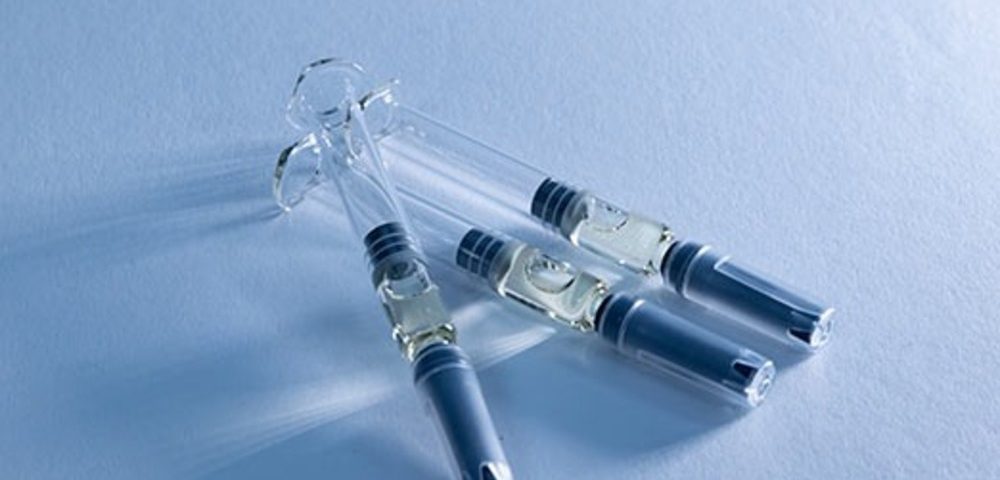
How to Assess Pre-Filled Syringe CDMO Readiness
Selecting the right Contract Development and Manufacturing Organisation for a pre-filled syringe programme is a decision that carries long-term consequences for product quality, regulatory compliance and commercial supply security. A facility that holds Good Manufacturing Practice certification may still lack the inspection throughput, container format flexibility or regulatory reach your specific programme requires, and those gaps are rarely visible without a structured assessment.
This guide sets out eight dimensions that pharmaceutical and biotechnology development and manufacturing leaders should formally evaluate before committing to a CDMO technology transfer for sterile injectables. Each dimension identifies what to look for, the questions to ask prospective partners and how the sterile manufacturing infrastructure at Adragos Pharma addresses those criteria within its European manufacturing cluster.
What Makes a CDMO Ready for Pre-Filled Syringe Technology Transfer?
A Contract Development and Manufacturing Organisation is ready for pre-filled syringe technology transfer when it can demonstrate certified aseptic fill-finish infrastructure, validated automated inspection systems, confirmed container format compatibility, regulatory certification across target markets and a structured pathway from clinical supply to commercial launch. These eight criteria should be formally assessed before any transfer agreement is signed.
Pre-filled syringes are technically demanding primary containers. They require aseptic filling under closed or semi-closed barrier conditions, high-speed automated inspection operating to zero-defect standards, and precise control of container geometry, closure systems and packaging configurations. The margin for error during technology transfer is narrow, and the consequences of an inadequate partner selection extend beyond a delayed batch into compounding regulatory risk and supply disruption.
Pharmaceutical and biotechnology teams frequently underestimate how much Contract Development and Manufacturing Organisation readiness varies across these dimensions. A facility may hold European Union Good Manufacturing Practice certification and still lack the inspection throughput, container format flexibility or regulatory reach required for a specific programme. The framework below is designed to surface those gaps before they become commercial liabilities.
1. Aseptic Fill-Finish Infrastructure
The quality of the aseptic environment is the most fundamental criterion in any pre-filled syringe Contract Development and Manufacturing Organisation assessment.
Confirm whether filling lines operate within Restricted Access Barrier Systems or isolator configurations, what sterilisation pathways are validated (aseptic filling, terminal sterilisation or both) and whether Clean-In-Place and Steam-In-Place systems are installed and validated across all production equipment.
Restricted Access Barrier Systems deliver a superior level of contamination control by combining closed-system protection with operational flexibility at high throughput speeds. A Contract Development and Manufacturing Organisation operating without Restricted Access Barrier System or equivalent barrier technology presents a higher contamination risk profile, which regulators will assess during technology transfer review under European Medicines Agency Good Manufacturing Practice Annex 1 and equivalent international frameworks.
Key questions to ask at this stage include:
- Are filling lines equipped with Restricted Access Barrier Systems or isolators?
- Are Clean-In-Place and Steam-In-Place systems validated across all aseptic processing equipment?
- Is full Aseptic Process Simulation compliance documented and current?
- Which sterilisation processes are available and validated for your molecule class?
At Adragos Maisons-Alfort in France, two dedicated pre-filled syringe filling lines operate within Restricted Access Barrier System environments, achieving a maximum throughput of up to 540 syringes per minute. Full Aseptic Process Simulation compliance is maintained across the site, with Clean-In-Place and Steam-In-Place systems integrated into all aseptic processing environments.
2. Container Format Compatibility and Platform Syringe Systems
Not all pre-filled syringe programmes use standard container formats. Volume range, primary closure configuration, material compatibility and the availability of specialist syringe platforms must each be confirmed before technology transfer commences.
Standard formats of 0.5 mL and 1 mL cover the majority of commercial programmes, but the availability of proprietary syringe platforms can substantially reduce product-specific development work during transfer. Platform systems with established validated processes, approved supplier chains and existing regulatory dossiers accelerate time to first batch and reduce the analytical burden on both the Contract Development and Manufacturing Organisation and the transferring organisation.
Key questions to ask at this stage include:
- Which fill volumes and container formats does the facility currently validate?
- Are there established platform syringe systems with existing regulatory dossier history?
- What primary closure configurations are supported, including stopper and needle shield specifications?
- Is there a dedicated line for specialist or sustainable packaging formats?
Adragos Maisons-Alfort supports three syringe systems: a standard pre-filled syringe format, Preventis™ and Eris™. The Eris™ platform includes a dedicated plastic-free packaging line. Confirming format compatibility at the outset prevents the need for process re-engineering once a technology transfer is underway, saving both time and cost at a critical programme stage.
3. Automated Inspection and Zero-Defect Quality Standards
Visual inspection is a regulatory requirement for all injectable drug products and a direct patient safety control. A common and underappreciated readiness gap occurs when a Contract Development and Manufacturing Organisation’s inspection capacity cannot keep pace with its filling line throughput, creating batch release bottlenecks at exactly the moment commercial supply pressure is highest.
The assessment should confirm:
- Whether inspection is 100% automated, semi-automated or partially manual
- The maximum inspection speed in units per minute
- The modalities covered, including optical, cosmetic, pinhole detection and labelling verification
- Whether the facility can perform manual visual inspection where specific markets require it
Adragos Maisons-Alfort operates two Seidenader automated inspection lines running at up to 600 units per minute. Since the inspection lines exceed the filling line capacity of 540 units per minute, there is no structural throughput bottleneck between filling and batch release. Where regulatory frameworks require manual visual inspection, such as in Japan, that capability is available within the Adragos network at the Kawagoe facility.
4. Regulatory Certification and Multi-Market Readiness
A Contract Development and Manufacturing Organisation’s certification portfolio determines which markets your product can reach following technology transfer, without requiring additional facility audits or regulatory submissions. The assessment must go beyond confirmation of European Union Good Manufacturing Practice status alone.
Confirm which national and regional health authorities have certified the facility, whether the site has been inspected by the United States Food and Drug Administration and whether all certificates are current. For global commercial programmes, certification by multiple international health authorities is a significant operational advantage that eliminates the need to re-qualify a separate facility for each new target market.
Adragos Maisons-Alfort holds European Union Good Manufacturing Practice certification and is certified by 12 international health authorities. For organisations targeting the Japanese market, Adragos operates a dedicated facility in Kawagoe, Japan, providing visual inspection and packaging services aligned with oversight by the Pharmaceuticals and Medical Devices Agency. This removes one of the most commonly cited barriers to Japanese market entry: the absence of a local manufacturing gate that can meet Pharmaceuticals and Medical Devices Agency expectations alongside Japan’s stringent zero-defect quality standards.
5. Commercial Throughput and Scalability
Technology transfer readiness is both a technical and a capacity question. Confirming that a Contract Development and Manufacturing Organisation can produce your first Good Manufacturing Practice batch is not sufficient. The assessment must establish whether the facility can sustain your commercial demand volumes, absorb demand variability and support concurrent product launches across its filling lines.
Key parameters to verify include:
- Maximum annual output for your product category
- Minimum and maximum batch sizes supported for your container format
- Number of filling and packaging lines available and their current utilisation levels
- How capacity is allocated across the existing client base
- Packaging line flexibility, including kit configuration options and availability of sustainable packaging
Adragos Maisons-Alfort can produce up to 150 million pre-filled syringe units annually, across five packaging lines including a dedicated plastic-free line for the Eris™ syringe system. Kit formats span 2-syringe to 76-syringe packs including Bag-In-Box options, providing flexibility across different distribution and dispensing models.
For programmes still in clinical development or transitioning from liquid and lyophilised vials to pre-filled syringes at commercial launch, Adragos Jura in Switzerland provides complementary aseptic fill-finish capacity for liquid and lyophilised vials, with no minimum batch size and capacity up to 74,000 vials per batch. Understanding where a programme sits on the clinical-to-commercial continuum at the point of partner selection determines which site configuration within a network is the appropriate primary facility.
6. Analytical Readiness and Stability Infrastructure
A Contract Development and Manufacturing Organisation that cannot execute method transfer, support analytical validation or conduct stability studies to International Council for Harmonisation conditions will create regulatory delays during technology transfer that directly extend time to market. This dimension is frequently not assessed with sufficient rigour during initial partner evaluation.
A facility that relies on external contract laboratories for release or stability testing adds complexity, cost and timeline risk to every batch cycle. In practice, the ability to manage analytical testing through to batch release internally is materially different from a Contract Development and Manufacturing Organisation that outsources these services.
Confirm whether the facility can perform:
- High-Performance Liquid Chromatography and Gas Chromatography validation
- Sterility suitability testing
- Endotoxin suitability testing
- Bioburden suitability testing
- Long-term stability storage under International Council for Harmonisation climate conditions
- Analytical testing at intermediate and final stability timepoints
Adragos Jura provides long-term stability storage under International Council for Harmonisation conditions, analytical testing at intermediate and final stability points and methods suitability testing covering High-Performance Liquid Chromatography validation, sterility, endotoxin and bioburden suitability. Stability studies span climate areas relevant to international regulatory submissions, removing the need for third-party stability management during the technology transfer period.
7. Clinical-to-Commercial Transition Planning
The transition from clinical trial material production to validated commercial manufacturing is the point at which most technology transfer programmes experience their most significant delays. This phase requires alignment across regulatory documentation, process validation, supply chain readiness and quality system integration.
Assess whether the Contract Development and Manufacturing Organisation has a defined, documented transition process with clear stage gates and demonstrated experience managing this transition for comparable molecules. The presence of a single dedicated project contact across phases significantly reduces the risk of knowledge loss at transition points. For programmes where the clinical and commercial manufacturing sites are different, the transition also requires re-qualification of the process at the receiving commercial facility, which adds time, cost and regulatory documentation that must be planned well in advance of launch.
Adragos Jura produces approximately 200 clinical batches per year and has supported five successful commercial launches. The facility operates a three-month turnaround from order to Good Manufacturing Practice-compliant batch, including controlled substance handling. Within the broader Adragos sterile manufacturing network, programmes can transition from Jura’s clinical-scale fill-finish environment in Switzerland to Maisons-Alfort’s large-scale commercial pre-filled syringe production in France without changing Contract Development and Manufacturing Organisation partner. This continuity of relationship, quality system and regulatory documentation substantially reduces the complexity of the clinical-to-commercial transition.
8. Intellectual Property Protection and Data Governance
For molecules of significant commercial value, and particularly for biological products where formulation and process knowledge carries long-term competitive implications, the intellectual property governance framework of a Contract Development and Manufacturing Organisation is a legitimate assessment criterion.
This is particularly relevant for organisations transferring proprietary formulation data, novel excipient combinations or unpublished analytical methods. The assessment should cover the confidentiality framework within the Quality Technical Agreement, data access controls within electronic batch record and laboratory information management systems, and the jurisdictional protections available under the applicable national legal framework.
Switzerland’s legal system provides well-established intellectual property protections. Adragos Jura identifies Swiss jurisdiction as a specific advantage for clients handling sensitive development data during clinical manufacturing and commercial preparation, providing an additional layer of legal certainty alongside the contractual confidentiality provisions within the manufacturing agreement.
Readiness Assessment Summary Checklist
The table below consolidates the eight assessment dimensions into a structured evaluation checklist. Each row identifies the key criteria a pharmaceutical or biotechnology team should verify before committing to a pre-filled syringe technology transfer agreement with a Contract Development and Manufacturing Organisation.
| Assessment Dimension | Key Criteria to Verify |
|---|---|
| Aseptic fill-finish infrastructure | Restricted Access Barrier System or isolator in use; Clean-In-Place and Steam-In-Place validated; Aseptic Process Simulation compliant and current |
| Container format compatibility | Validated volume range confirmed; closure configuration compatibility verified; platform syringe systems available with existing dossier history |
| Automated inspection capability | 100% automated inspection confirmed; inspection speed matches or exceeds fill line throughput; optical, cosmetic, pinhole and labelling modalities covered |
| Regulatory certification | European Union Good Manufacturing Practice current; United States Food and Drug Administration inspection history confirmed; certifications verified for all target launch markets |
| Commercial throughput | Annual capacity confirmed for product category; batch size range validated against programme forecast; packaging line flexibility and kit format options available |
| Analytical readiness | In-house High-Performance Liquid Chromatography and Gas Chromatography capability; sterility, endotoxin and bioburden testing available on site; International Council for Harmonisation stability storage confirmed |
| Clinical-to-commercial transition | Documented transition stage gates in place; clinical-to-commercial track record confirmed; single dedicated point of contact available across all programme phases |
| Intellectual property governance | Jurisdictional legal protections confirmed; data access controls verified within electronic systems; confidentiality provisions documented in Quality Technical Agreement |
The Case for an Integrated European CDMO Network
A single-site Contract Development and Manufacturing Organisation may satisfy the technical criteria for pre-filled syringe manufacturing, yet still leave programmes exposed to supply risk, regulatory scope limitations or capacity constraints at the point of commercial launch. An integrated multi-site network resolves these vulnerabilities structurally rather than contractually.
When a Contract Development and Manufacturing Organisation operates clinical and commercial manufacturing within the same quality system and technology transfer framework, the documentation burden of moving between development stages is substantially reduced. Regulatory continuity across sites means that changes in manufacturing scale do not trigger a full requalification exercise. Supply chain resilience is improved because production can be allocated across sites in response to demand shifts or unforeseen disruption.
Adragos Pharma operates seven Good Manufacturing Practice facilities across France, Germany, Switzerland, Greece, Norway and Japan. The Adragos Sterile Cluster integrates four complementary sites:
- Adragos Jura, Switzerland: clinical and small-to-medium scale commercial fill-finish for liquid and lyophilised vials, certified by the European Medicines Agency, the United States Food and Drug Administration and Swissmedic
- Adragos Maisons-Alfort, France: large-scale commercial pre-filled syringe and vial production, certified by 12 international health authorities
- Adragos Livron, France: ampoule manufacturing with aseptic and terminal sterilisation at up to 120 million units annually
- Adragos Kawagoe, Japan: visual inspection and packaging services for Japanese market entry, aligned with Pharmaceuticals and Medical Devices Agency requirements
This cluster provides a continuous, structured pathway from early clinical supply through to high-volume global commercial manufacturing within a single Contract Development and Manufacturing Organisation relationship, without requiring renegotiation of quality agreements or re-establishment of regulatory contacts at each transition point.
How Adragos Pharma Supports Pre-Filled Syringe Programmes
Adragos Pharma is a global Contract Development and Manufacturing Organisation operating seven Good Manufacturing Practice facilities across Europe and Japan. Within its sterile manufacturing network, the Maisons-Alfort facility in France serves as the centre of large-scale commercial pre-filled syringe production, with an annual capacity of 150 million units across Restricted Access Barrier System-equipped filling lines achieving up to 540 syringes per minute and 100% automated inspection at up to 600 units per minute.
For programmes in clinical development or requiring small-to-medium commercial scale fill-finish for liquid and lyophilised vials, Adragos Jura in Switzerland provides a clinically focused manufacturing environment producing approximately 200 clinical batches per year, with no minimum batch size, a three-month order-to-batch turnaround and certification from the European Medicines Agency, the United States Food and Drug Administration and Swissmedic.
Across the Adragos Sterile Cluster, the integration of Jura, Maisons-Alfort and Livron provides a structured route from clinical development through commercial launch under a single Contract Development and Manufacturing Organisation relationship, without requiring changes to quality agreements, regulatory contacts or manufacturing documentation frameworks at each transition point.
To discuss your pre-filled syringe programme and initiate a readiness assessment, contact the Adragos team at adragos-pharma.com.
h2 id=”faqs”>Frequently Asked Questions
What is a CDMO technology transfer for pre-filled syringes?
A technology transfer for pre-filled syringes is the formal process by which a pharmaceutical or biotechnology company moves manufacturing knowledge, analytical methods, process parameters and quality documentation from one site to a Contract Development and Manufacturing Organisation, enabling that organisation to produce the product to the same validated standard. The process typically covers formulation transfer, equipment qualification, process validation, analytical method transfer and regulatory filing support.
What certifications should a European CDMO hold for pre-filled syringe manufacturing?
As a baseline, a European Contract Development and Manufacturing Organisation should hold a current European Union Good Manufacturing Practice certificate. For programmes targeting the United States, United States Food and Drug Administration inspection readiness is essential. For Switzerland-based sites, Swissmedic certification is required. Facilities certified by multiple international health authorities provide the broadest commercial reach from a single manufacturing relationship.
How do I evaluate a CDMO’s aseptic fill-finish capability for pre-filled syringes?
Evaluate the aseptic environment type (Restricted Access Barrier System or isolator), the filling line speed in units per minute, the validated container formats and volumes, the sterilisation processes available and the Aseptic Process Simulation compliance status. Also confirm whether Clean-In-Place and Steam-In-Place systems are validated and whether inspection throughput is sufficient to match or exceed filling line capacity without creating batch release bottlenecks.
What is the typical turnaround time for clinical pre-filled syringe batches at a CDMO?
Turnaround times depend on the complexity of the product and the preparedness of the documentation package transferred to the Contract Development and Manufacturing Organisation. A facility with established fill-finish infrastructure and validated analytical methods can compress timelines considerably. Adragos Jura offers a three-month order-to-batch turnaround for clinical manufacturing programmes, including controlled substance handling, with no minimum batch size restriction.
Why does an integrated CDMO network matter for pre-filled syringe technology transfer?
An integrated network allows programmes to progress from clinical to commercial scale within the same quality system and regulatory documentation framework, reducing requalification effort and maintaining supply chain continuity. It eliminates the need to re-establish Contract Development and Manufacturing Organisation relationships, conduct additional facility audits or renegotiate quality agreements at the point of commercial transition. This is particularly important for programmes with tight launch timelines where any avoidable delay carries significant commercial cost.
What makes Adragos Pharma a strong European CDMO for pre-filled syringe programmes?
Adragos Pharma offers an integrated sterile manufacturing cluster combining clinical-scale aseptic fill-finish at Adragos Jura (Switzerland) with large-scale commercial pre-filled syringe production at Adragos Maisons-Alfort (France), certified by 12 international health authorities. Programmes benefit from Restricted Access Barrier System-equipped filling lines, 100% automated inspection, three established syringe platform formats, up to 150 million units of annual pre-filled syringe capacity and a single dedicated project contact across all programme phases.
Discuss Your Pre-Filled Syringe Programme with Adragos Pharma
If you are evaluating European Contract Development and Manufacturing Organisation partners for a pre-filled syringe technology transfer, our sterile manufacturing team is available to discuss your programme requirements in detail and conduct a site-specific readiness assessment against your product profile.
