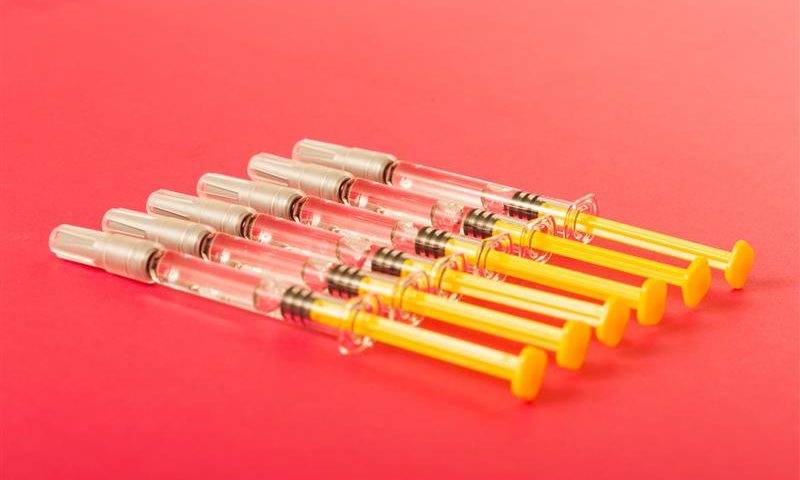
A pre-filled syringe technology transfer is a structured, phased process that moves a validated or development-stage manufacturing programme from an originating site to a receiving Contract Development and Manufacturing Organisation. It spans seven sequential phases: feasibility assessment, documentation compilation, analytical method transfer, equipment mapping, process validation, regulatory filing alignment and commercial batch readiness. Each phase requires formal review and sign-off before the next begins, and the rigour applied at each stage directly determines the speed and regulatory compliance of the overall programme.
This guide is written for pharmaceutical and biotechnology development leaders who have identified a manufacturing partner and are planning or actively executing a transfer. It describes what each phase requires, the decisions that must be made at each stage and how the Adragos Pharma sterile manufacturing network supports programmes throughout this process. If you are still evaluating partner options, our guide to choosing a European Contract Development and Manufacturing Organisation for pre-filled syringes provides the framework for that earlier decision.
What a Pre-Filled Syringe Technology Transfer Involves
A pre-filled syringe technology transfer is more technically demanding than the transfer of most other sterile dosage forms. The container-closure system is a direct constituent of the drug product, not a passive secondary packaging component. Variations in syringe barrel geometry, stopper composition, plunger rod specification or needle shield configuration can affect extractable and leachable profiles, dose accuracy, particulate generation and container-closure integrity. Each of these parameters must be formally qualified at the receiving site, not assumed to be equivalent to those demonstrated at the originating site.
The seven phases described in this guide must be completed in sequence. Analytical methods cannot be transferred before documentation has been compiled. Equipment mapping cannot begin before methods are established. Process validation cannot commence before equipment has been qualified. This sequential dependency reflects the scientific logic of the transfer. Shortcuts taken at any phase introduce risk that will surface at a later, more costly stage of the programme.
The timeline and complexity of a transfer also depend on when it is initiated. A transfer that begins during development, before formulation is finalised, allows the receiving Contract Development and Manufacturing Organisation to provide input on container-closure system selection, pump configuration and sterilisation strategy, reducing the likelihood of process changes being required once development is complete. A transfer initiated after a regulatory filing has already been submitted carries a heavier documentation burden and may require submission of manufacturing variations to one or more health authorities before the receiving site can supply product commercially.
Phase 1: Feasibility Assessment
The feasibility phase determines whether the receiving facility can technically, regulatory-wise, financially and logistically execute the transfer before any documentation is exchanged or any formal agreement is signed. This phase protects both parties from committing resources to a transfer that cannot be completed on the terms required by the programme.
For pre-filled syringes specifically, technical feasibility must confirm that the receiving site’s filling lines support the target container format and fill volume, that the sterilisation pathway required for the formulation is validated at the receiving site, and that the aseptic environment configuration is appropriate for the molecule class. A biological product requiring Restricted Access Barrier System-equipped filling at a controlled temperature cannot be transferred to a site that lacks this configuration, regardless of any other capabilities the site may hold.
Good Manufacturing Practice feasibility covers whether the receiving site’s quality system, environmental monitoring history and Aseptic Process Simulation status can support the addition of this product class without triggering a major site variation or requiring new regulatory approvals before the first batch can proceed. Budgetary and timeline feasibility must also be addressed formally at this stage. The estimated cost of the transfer, including documentation, analytical method transfer, equipment qualification and validation batches, must be aligned with the development programme’s available resource before commitment is made.
At Adragos Jura, feasibility assessment is a formal first step covering technical, Good Manufacturing Practice, budgetary and timeline dimensions before any project is accepted. This structured approach ensures that programmes entering the transfer process have a realistic, costed pathway to a compliant first batch. For clinical-scale programmes, a first Good Manufacturing Practice-compliant batch is typically achievable within three months of order, including programmes requiring controlled substance handling.
Phase 2: Documentation Compilation and Transfer
The documentation package is the technical foundation of the entire transfer. Its completeness at the point of handover determines how quickly the receiving Contract Development and Manufacturing Organisation can begin equipment mapping and method transfer. Gaps in documentation at this stage do not simply delay one phase — they compound across every subsequent phase until they are resolved.
For a pre-filled syringe programme, the documentation package must include:
- Formulation development reports with excipient selection rationale
- Drug substance and drug product specifications
- Container-closure system specifications covering the syringe barrel, stopper, plunger rod and needle shield
- Extractable and leachable study data for the specific container-closure system configuration
- Filling process parameters including fill speed, fill weight targets and in-process control limits
- Cleaning and sterilisation validation data from the originating site
- Analytical method descriptions and validation reports
- Batch record templates
- Lyophilisation cycle development data where freeze-drying is required, including shelf temperature profiles, primary and secondary drying parameters and collapse temperature data
The documentation package should be reviewed by the receiving facility’s technical team before transfer commences, and any identified gaps documented in a formal gap analysis report with agreed closure timelines. This gap analysis becomes a live project management tool that tracks outstanding items against the overall transfer schedule. Common gaps that create downstream delays include missing extractable and leachable data for the specific container configuration, incomplete sterilisation cycle development records and analytical methods that have not yet been validated to the standard required by the target regulatory markets.
The more complete the documentation at handover, the earlier the receiving facility can initiate parallel workstreams such as raw material qualification, equipment scheduling and regulatory strategy development. Treating documentation compilation as an administrative task rather than a technical project risk is one of the most frequent causes of technology transfer delay in pre-filled syringe programmes.
Phase 3: Analytical Method Transfer and Stability Planning
Once documentation has been received and the gap analysis completed, the receiving facility transfers the originator’s analytical methods into its own laboratory systems. This phase must be completed before any product batch is manufactured, because analytical methods underpin release testing and stability assessment for every batch produced. Stability programme design must also be fixed at this stage: data collection is time-dependent and cannot be backdated after batches have been manufactured.
Analytical method transfer for sterile injectables involves more than re-running existing procedures on the receiving site’s equipment. It requires formal suitability testing to confirm that each method performs reliably in the new laboratory environment, using the receiving site’s reagents, reference standards and instruments. For pre-filled syringe programmes, suitability testing typically covers:
- High-Performance Liquid Chromatography method validation to confirm specificity, linearity, accuracy and precision at the receiving site
- Sterility suitability testing, confirming that the method can reliably detect microbial contamination in the specific product matrix
- Endotoxin suitability testing, confirming that the product matrix does not interfere with the Limulus Amebocyte Lysate or recombinant Factor C test system
- Bioburden suitability testing, confirming that microbiological detection is not inhibited by the product formulation or its excipients
- Container-closure integrity test method qualification where a novel or non-compendial method is required
Stability programme design must align with International Council for Harmonisation conditions relevant to all target regulatory markets. Long-term and accelerated storage conditions, intermediate timepoints and the frequency of analytical testing must all be defined in an approved stability protocol before the first batch is manufactured at the receiving site. Data collected before this protocol is in place cannot routinely support a regulatory submission.
At Adragos Jura, analytical suitability testing covers High-Performance Liquid Chromatography validation, sterility, endotoxin and bioburden suitability. Stability studies are conducted under International Council for Harmonisation conditions, with analytical testing at intermediate and final stability timepoints to support regulatory submissions across all target markets.
Phase 4: Equipment Mapping and Process Design
Equipment mapping translates the process parameters in the transferred documentation into the specific equipment configuration at the receiving site. For pre-filled syringes, differences in filling line geometry, pump type, barrier system configuration and sterilisation infrastructure between the originating and receiving sites can require formal process bridging studies to confirm that the product behaves equivalently under the new conditions. This phase must be completed before any engineering or validation runs are scheduled.
The principal decisions to be resolved at this phase are as follows.
Filling Line Selection
Confirm which filling line at the receiving site supports the target container format, fill volume and throughput requirement. For commercial-scale programmes, filling speed in units per minute must be confirmed against forecast demand to ensure the line can deliver the required batch size within the available production window. At Adragos Maisons-Alfort, two dedicated pre-filled syringe filling lines operate within Restricted Access Barrier System environments at up to 540 syringes per minute, supporting 0.5 mL and 1 mL formats across three syringe platforms: Standard, Preventis™ and Eris™.
Pump Type Selection
Pump selection for aseptic filling must be matched to the formulation’s rheological properties. Peristaltic pumps are generally preferred for shear-sensitive biologics, whilst rotary piston pumps offer higher accuracy and repeatability for small-volume fills with low-viscosity formulations. Confirming the appropriate pump type before the first engineering run prevents dose accuracy failures during validation. Both peristaltic and rotary piston pump options are available at Adragos Jura.
Restricted Access Barrier System Configuration
The aseptic processing environment at the receiving site must be assessed against the contamination control strategy for the specific product. Confirm whether the Restricted Access Barrier System configuration, classified zone layout and intervention protocols are appropriate for the product class and the batch size being transferred.
Lyophilisation Parameters
Where the product requires lyophilisation, the receiving site’s freeze-dryer capacity, shelf area, condenser specification and available shelf temperature profiles must be confirmed against the transferred cycle parameters. Cycle bridging studies are commonly required when the freeze-dryer dimensions at the receiving site differ from those at the originating site. At Adragos Jura, lyophilisers of 3 m² and 9 m² capacity support a range of batch sizes for both clinical and commercial programmes.
Gap Identification and Resolution
Any gap identified between the process requirements in the transferred documentation and the equipment capabilities at the receiving site must be formally documented, assessed for regulatory impact and resolved before process validation begins. Where a gap requires a change to a previously documented process parameter, formal change control must be initiated and the implications assessed against the existing filing status of the product. Identifying and resolving gaps at this phase is considerably less costly than discovering them during validation batches or at regulatory submission.
Phase 5: Aseptic Process Simulation and Process Validation
Aseptic Process Simulation is the regulatory requirement that directly tests whether the receiving facility can produce the product without microbial contamination under routine production conditions. It must be successfully completed before any Good Manufacturing Practice product batch can be commercially released. No other phase of the transfer replaces or compensates for a failed or incomplete Aseptic Process Simulation.
For a transferred pre-filled syringe programme, Aseptic Process Simulation must reflect the specific process conditions of that product: the fill volume, fill speed, duration of the filling campaign, the container-closure system used and all interventions anticipated during routine production. A generic simulation that does not account for these product-specific conditions does not satisfy current European Medicines Agency Good Manufacturing Practice Annex 1 or United States Food and Drug Administration expectations for commercial aseptic filling.
Following successful Aseptic Process Simulation, process performance qualification batches are manufactured using the actual drug product. These batches demonstrate that the transferred process consistently produces product meeting all release specifications across the full commercial batch size. The number of qualification batches required and the statistical approach used to demonstrate process consistency must be agreed with the relevant regulatory authority for each target market before the qualification programme begins.
Cleaning validation must also be executed at this stage. For multi-product facilities, cleaning validation confirms that the cleaning procedure removes the drug product and all excipients to limits that protect the next product manufactured on the same equipment from cross-contamination. Cleaning validation is product-specific and must be conducted for each new molecule introduced to a filling line, even where the general cleaning procedure has been previously validated for other products.
At Adragos Maisons-Alfort, fully compliant Aseptic Process Simulation services are maintained across both pre-filled syringe filling lines, each operating within a Restricted Access Barrier System environment with validated Clean-in-Place and Sterilise-in-Place systems across all aseptic processing equipment.
Phase 6: Regulatory Filing Alignment
The regulatory filing strategy for a technology transfer must be determined at the outset of the programme, not at the point of submission. Whether the transfer occurs before or after marketing authorisation is granted, and which health authorities must be notified or approve the change before the receiving site can supply product commercially, determines the length of the regulatory pathway and must be incorporated into the overall project schedule from the start.
Where the technology transfer occurs before a marketing authorisation application is submitted, the receiving site should be named in the initial submission as the manufacturing site for the product. This is the most efficient regulatory route and avoids the need for a post-approval variation to add the site. It requires that all process validation, Aseptic Process Simulation and analytical method transfer activities at the receiving site are completed and documented before the filing is made.
Where the transfer occurs after a marketing authorisation has already been granted, a manufacturing site change must be notified to or formally approved by the relevant health authorities before the receiving site can supply product commercially. The type of variation required, and whether it is subject to prior approval or notification, depends on the health authority, the nature of the changes made during the transfer and whether any process parameters have been altered relative to those described in the approved dossier.
The certifications held by the receiving facility directly affect the scope of required regulatory action. A facility already inspected and approved by the health authorities in all target markets reduces the variation burden materially. Adragos Maisons-Alfort holds certification from 12 international health authorities, which means that commercial batches released from the site can supply the majority of major global markets without requiring a separate facility approval process for each jurisdiction.
For programmes targeting the Japanese market, the EU-Japan Mutual Recognition Agreement is an important strategic consideration. Products manufactured at a Good Manufacturing Practice certified European site can proceed to visual inspection and packaging in Japan under this agreement, without requiring in-country fill-and-finish manufacture. The applicability of the agreement to a specific product and manufacturing site must be confirmed with the relevant competent authority and incorporated into the regulatory filing strategy from the outset of the transfer programme. Adragos Kawagoe provides the local visual inspection and packaging gate that supports this pathway, aligned with requirements set by the Pharmaceuticals and Medical Devices Agency and Japan’s Ministry of Health, Labour and Welfare.
Phase 7: Scale-Up and Commercial Batch Readiness
The final phase of a pre-filled syringe technology transfer transitions the programme from validated process and regulatory approval into routine commercial production. This phase covers the operational readiness of the receiving Contract Development and Manufacturing Organisation to supply product reliably at the volumes and frequencies required by the commercial launch plan. Validation alone does not constitute commercial readiness.
Commercial batch readiness requires the following to be confirmed before the first routine commercial batch is scheduled:
- Batch record templates fully transferred and approved within the receiving site’s electronic batch record system, reflecting the validated process parameters and all approved change control outcomes from the transfer programme
- Supply chain qualification completed for all raw materials, container-closure system components and secondary packaging materials. Suppliers approved at the originating site are not automatically approved at the receiving site and must be formally re-qualified unless already on the receiving site’s approved supplier list
- Packaging line qualification confirmed for the specific kit format, label configuration and serialisation setup required for each target market. Serialisation must comply with the European Falsified Medicines Directive or the equivalent requirements in non-European markets
- Qualified Person batch release procedures confirmed, including certificate of analysis templates, product release specifications and the quality management system interface between the sponsor and the receiving Contract Development and Manufacturing Organisation
- Stability programme confirmed as ongoing from the first commercial-scale validation batch, with storage under International Council for Harmonisation conditions and testing at all required stability timepoints for each target regulatory market
At Adragos Maisons-Alfort, commercial pre-filled syringe production is supported by five packaging lines, including a dedicated plastic-free packaging line for the Eris™ syringe format. Kit configurations range from 2-syringe to 76-syringe packs including Bag-in-Box options, providing flexibility across different distribution and dispensing models. With an annual capacity of 150 million pre-filled syringe units and certification from 12 international health authorities, the site supports commercial supply to the majority of major global markets from a single manufacturing point.
For programmes that began clinical manufacturing at Adragos Jura, the transition to commercial-scale production at Maisons-Alfort occurs within the same quality system and manufacturing network. This continuity reduces the documentation burden of the intra-network transfer, preserves existing project team relationships and avoids the need to re-establish a new Contract Development and Manufacturing Organisation relationship at the most operationally sensitive point of the programme.
How Adragos Pharma Supports Technology Transfer Across All Phases
Adragos Pharma operates a sterile manufacturing cluster that covers each phase of the technology transfer process within a single partner relationship. Programmes are supported by a dedicated project contact throughout, maintaining continuity of technical knowledge and communication from feasibility assessment through to commercial batch release.
The four sites within the Adragos sterile cluster serve complementary roles across a technology transfer programme:
- Adragos Jura, Switzerland supports Phases 1 through 5 for clinical and small-to-medium commercial scale aseptic fill-and-finish programmes involving liquid and lyophilised vials. Certified by the European Medicines Agency, the United States Food and Drug Administration and Swissmedic, with in-house analytical method transfer, International Council for Harmonisation stability studies and a no-minimum-batch-size policy that accommodates early-phase programmes with limited Active Pharmaceutical Ingredient availability
- Adragos Maisons-Alfort, France supports Phases 5 through 7 for large-scale commercial pre-filled syringe production. With two Restricted Access Barrier System-equipped filling lines, 100% automated inspection at up to 600 units per minute, five packaging lines and certification from 12 international health authorities, the site provides the commercial infrastructure required to support global launch from a single European manufacturing point
- Adragos Livron, France provides sterile ampoule manufacturing using both aseptic filling and terminal sterilisation at an annual capacity of 120 million units, supporting programmes where a secondary sterile container format is required alongside the primary pre-filled syringe programme, including controlled drug manufacture
- Adragos Kawagoe, Japan provides local visual inspection and packaging services supporting Phase 6 and Phase 7 for programmes using the EU-Japan Mutual Recognition Agreement pathway, aligned with Pharmaceuticals and Medical Devices Agency and Ministry of Health, Labour and Welfare requirements
Technology Transfer Phase Summary
The table below consolidates the seven phases into a structured planning reference, identifying the key outputs required at each stage and the Adragos site best positioned to support it.
| Phase | Key Outputs Required | Adragos Support |
|---|---|---|
| 1. Feasibility Assessment | Technical, Good Manufacturing Practice, budgetary and timeline feasibility confirmed in writing; project formally accepted | Adragos Jura |
| 2. Documentation Compilation | Complete documentation package transferred; gap analysis completed with agreed closure timeline | All sites |
| 3. Analytical Method Transfer | High-Performance Liquid Chromatography, sterility, endotoxin and bioburden suitability confirmed; stability protocol approved before first batch | Adragos Jura |
| 4. Equipment Mapping | Process parameters mapped to receiving equipment; pump type, filling line and barrier system configuration confirmed; all gaps documented and resolved | Adragos Jura / Maisons-Alfort |
| 5. Aseptic Process Simulation and Process Validation | Product-specific Aseptic Process Simulation passed; process performance qualification batches completed; cleaning validation executed | Adragos Jura / Maisons-Alfort |
| 6. Regulatory Filing Alignment | Variation type and notification scope confirmed for all target markets; filings submitted; health authority approvals obtained where required | All sterile cluster sites |
| 7. Scale-Up and Commercial Readiness | Batch records approved in electronic batch record system; supply chain qualified; packaging and serialisation configured; Qualified Person release procedures confirmed | Adragos Maisons-Alfort / Kawagoe |
Frequently Asked Questions
How long does a pre-filled syringe technology transfer typically take?
Duration depends on the complexity of the product, the completeness of the documentation package at handover and the current regulatory approval status of the receiving site for the target markets. A transfer initiated before marketing authorisation, where the receiving site is named in the initial submission, is generally faster than a post-approval transfer requiring a manufacturing variation. For clinical-scale programmes at a site with established aseptic infrastructure and in-house analytical capability, a first Good Manufacturing Practice-compliant batch can be achieved within three months of order for straightforward programmes. Commercial-scale transfers incorporating process validation, packaging qualification and regulatory variation submission involve additional timelines that must be planned on a programme-specific basis.
What documents are required for a pre-filled syringe technology transfer?
The documentation package must include: formulation development reports with excipient selection rationale; drug substance and drug product specifications; container-closure system specifications covering the syringe barrel, stopper, plunger rod and needle shield; extractable and leachable study data; filling process parameters; cleaning and sterilisation validation data; analytical method descriptions and validation reports; and batch record templates. Where lyophilisation is required, complete cycle development data including shelf temperature profiles and collapse temperature data must also be included. A formal gap analysis against the receiving site’s requirements should be completed at the point of handover.
When must Aseptic Process Simulation be conducted during a technology transfer?
Aseptic Process Simulation must be successfully completed at the receiving site before any Good Manufacturing Practice product batch can be commercially released. It must follow equipment qualification and process design finalisation, and must reflect the specific process conditions of the product being transferred — including fill volume, fill speed, the container-closure system used and all anticipated production interventions. A generic simulation that does not account for these product-specific conditions does not satisfy current European Medicines Agency Good Manufacturing Practice Annex 1 requirements for commercial aseptic processing.
Can a technology transfer begin whilst a product is still in clinical development?
Yes, and initiating the transfer during development is generally preferable. A receiving Contract Development and Manufacturing Organisation engaged at the development stage can provide input on container-closure system selection, pump configuration and sterilisation strategy, reducing the likelihood of process changes being required after development is finalised. Early engagement also allows the receiving site to be named in the initial marketing authorisation application as the commercial manufacturing site, avoiding the need for a post-approval variation and the regulatory timelines that accompany it. Stability data collection at the receiving site can also begin with the first clinical batch, providing longer-term data sets to support the submission.
What happens if gaps are identified during equipment mapping?
Gaps identified during equipment mapping must be formally documented, assessed for regulatory impact and resolved before process validation begins. Where a gap requires a change to a previously documented process parameter, formal change control must be initiated and the implications assessed against the existing filing status of the product. If the change affects parameters described in an approved marketing authorisation dossier, a regulatory variation may be required before the modified process can be used for commercial supply. Identifying and resolving gaps at this phase is considerably less costly than discovering them during validation batches or, more critically, at the point of regulatory submission.
How does the EU-Japan Mutual Recognition Agreement affect a technology transfer strategy?
The EU-Japan Mutual Recognition Agreement allows products manufactured at a Good Manufacturing Practice certified European site to proceed to visual inspection and packaging in Japan without requiring in-country fill-and-finish manufacture. For pharmaceutical companies targeting Japan from a European manufacturing base, this means a single upstream site can serve European, United States and Japanese markets, provided visual inspection and packaging are performed locally in Japan by a facility meeting Pharmaceuticals and Medical Devices Agency requirements. This pathway must be incorporated into the regulatory filing strategy at the outset of the transfer programme, as it affects the dossier structure and the manufacturing site declarations made to Japanese regulators. Adragos Kawagoe provides this final quality gate within Japan.
Does Adragos Pharma handle technology transfers for controlled substances?
Adragos Jura in Switzerland handles controlled substance manufacturing as part of its clinical and commercial fill-and-finish services, with a three-month turnaround from order to Good Manufacturing Practice-compliant batch. Adragos Kawagoe in Japan also handles controlled drugs for visual inspection and packaging purposes. Controlled substance capability is confirmed during the feasibility assessment phase and must be validated against the national licence requirements of the receiving site’s jurisdiction before the transfer commences.
Plan Your Pre-Filled Syringe Technology Transfer with Adragos Pharma
Adragos Pharma’s sterile manufacturing team supports pharmaceutical and biotechnology partners at every phase of a pre-filled syringe technology transfer, from initial feasibility assessment at Adragos Jura through to large-scale commercial supply at Adragos Maisons-Alfort and Japanese market entry via Adragos Kawagoe. To discuss your programme requirements and initiate the feasibility assessment process, contact our team at adragos-pharma.com.
