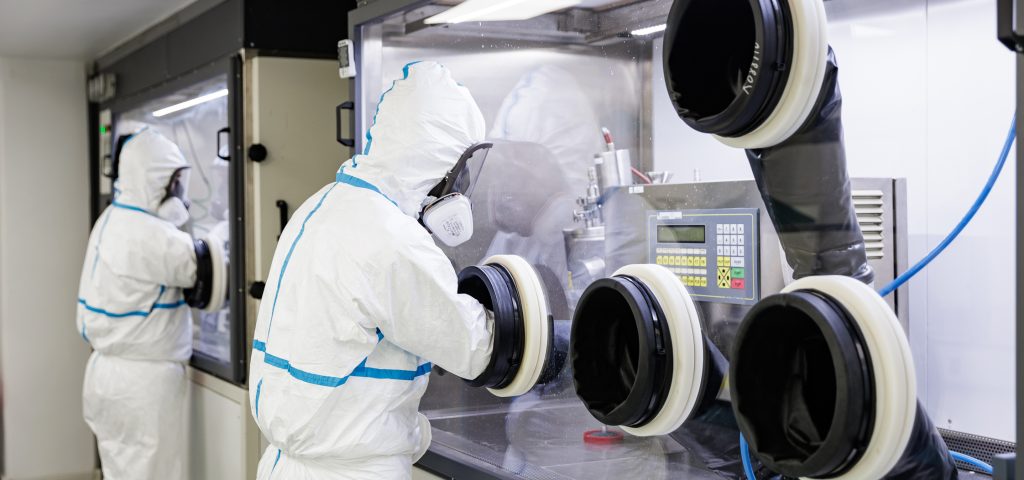
Selecting a Contract Development and Manufacturing Organisation for small molecule formulation and High-Potency Active Pharmaceutical Ingredient handling is one of the most consequential decisions a pharma or biotech team will make. Choosing the right small molecule HPAPI CDMO shortens timelines, protects operator safety and supports a clean regulatory path from first-in-human through commercial supply. The wrong partner introduces containment risk, technology transfer delays and avoidable cost. This guide sets out the criteria developers should apply when evaluating a partner for small molecule formulation and high-potency handling in 2026.
Table of Contents
- What is a small molecule HPAPI CDMO?
- Why CDMO selection matters more in 2026
- Eight criteria for evaluating a small molecule HPAPI CDMO
- How Adragos Pharma supports small molecule and HPAPI development
- Questions to ask a CDMO during due diligence
- Common pitfalls in CDMO selection
- Building a long-term partnership
- Frequently asked questions
What Is a Small Molecule HPAPI CDMO?
A small molecule HPAPI CDMO is a Contract Development and Manufacturing Organisation that develops and produces oral or injectable drug products containing High-Potency Active Pharmaceutical Ingredients. These compounds typically have an Occupational Exposure Limit below one microgram per cubic metre and require dedicated containment, engineering controls and trained personnel across the development and manufacturing workflow.
For pharma and biotech teams, the core promise of a high-potency capable partner is the ability to handle potent compounds safely while delivering formulation development, clinical supply and commercial scale-up under a single quality system.
Why CDMO Selection Matters More in 2026
Three forces are reshaping partner selection this year.
- The small molecule pipeline continues to grow in potency. Oncology, hormone therapies and targeted treatments increasingly rely on compounds that demand containment expertise beyond standard Good Manufacturing Practice facilities.
- Regulators are applying tighter scrutiny to data integrity, supply chain transparency and contamination control strategy. The European Medicines Agency, the United States Food and Drug Administration and the Pharmaceuticals and Medical Devices Agency in Japan all expect documented, health-based exposure limits.
- Sponsors are consolidating vendors. A partner that can support a project from early formulation through commercial manufacturing reduces the number of technology transfers, each of which introduces timeline and quality risk.
Eight Criteria for Evaluating a Small Molecule HPAPI CDMO
1. Containment engineering and occupational exposure banding
Ask the partner to share its containment strategy by Occupational Exposure Band. A credible provider will describe isolators, closed transfer systems, dedicated suites and air handling design alongside validated cleaning procedures. Request the Acceptable Daily Exposure assessment process and the cleaning verification limits applied between campaigns.
2. Formulation development capabilities
Small molecule programmes often require solubility enhancement, bioavailability optimisation and stability work before a robust dosage form emerges. Evaluate expertise across oral solid dosage forms, semi-solids, liquids and sterile presentations. Confirm access to preformulation, analytical method development and stability storage under International Council for Harmonisation conditions.
3. Integrated development to commercial pathway
A partner that can carry a programme from clinical batches through registration and commercial supply avoids repeated technology transfers. Ask how many programmes the provider has progressed from Phase One into commercial manufacturing within its own network, and how scale-up is managed between development and production suites.
4. Regulatory track record
Review inspection history with relevant authorities. A strong partner will openly discuss recent inspections, observations and remediation. Confirm experience filing in your target markets, whether that is the European Union, the United States, Japan or emerging regions.
5. Quality systems and data integrity
The quality system should extend across all sites within the network, with harmonised standard operating procedures, electronic batch records where appropriate and a clear deviation and Corrective and Preventive Action process. Ask to see the structure of the Pharmaceutical Quality System and how data integrity controls are applied to laboratory and manufacturing data.
6. Supply chain resilience
Evaluate raw material sourcing, dual-sourcing strategies and inventory practices. The disruptions of recent years have made supply chain transparency a baseline expectation. A capable partner should be able to map upstream dependencies and explain mitigation plans for critical materials.
7. Technology transfer discipline
The technology transfer process is where most timeline overruns originate. Look for a documented transfer methodology with defined gate reviews, joint risk assessments and analytical method co-validation. Ask how many transfers the provider has executed in the past twenty-four months and what the typical timeline looks like for a comparable programme.
8. Commercial manufacturing capacity and flexibility
For programmes approaching launch, verify available capacity, batch size range and the ability to scale volumes as market demand evolves. Multi-site networks offer redundancy that single-site providers cannot match.
How Adragos Pharma Supports Small Molecule and HPAPI Development
Adragos Pharma is a global Contract Development and Manufacturing Organisation with development and manufacturing sites across Europe and Japan, supporting more than one hundred pharma and biotech customers from early development through commercial supply.
High-potency work begins at the Adragos development centre in Athens, Greece. The site has been upgraded with a dedicated High-Potency Active Pharmaceutical Ingredient laboratory and handles potent compounds and controlled substances under appropriate containment, including a single-pot granulator reserved for highly potent materials. The Athens team brings more than twenty-five years of formulation experience, a Quality by Design development methodology, a European Union Good Manufacturing Practice analytical laboratory with two Qualified Persons for release, and a regulatory track record of more than one hundred and fifty electronic Common Technical Document submissions with product approvals in more than twenty countries.
From there, the wider Adragos network carries a programme across a broad range of dosage forms, including oral solids, semi-solids, non-sterile liquids and sterile presentations, all under a unified quality system. This structure is designed to reduce the number of technology transfers across a product lifecycle and to give sponsors a single accountable partner from first formulation through commercial launch.
For site-by-site containment scope and dosage form expertise, prospective customers are encouraged to request a technical capability review.
Questions to Ask a CDMO During Due Diligence
Before signing a Master Services Agreement, structured due diligence should cover the following.
- What is the Occupational Exposure Band capability of each proposed suite?
- How is cross-contamination controlled between potent and non-potent products?
- What is the typical timeline from technology transfer initiation to first engineering batch?
- Which regulatory authorities have inspected the proposed site in the past three years?
- What is the escalation path for deviations affecting clinical or commercial supply?
- How is project governance structured, and who is the single point of accountability?
- What digital systems support batch release, stability tracking and quality oversight?
Common Pitfalls in CDMO Selection
Sponsors frequently underweight three areas during selection.
- Cultural fit. Communication frequency, transparency during deviations and willingness to escalate issues early matter as much as technical capability. A site visit and conversations with operational staff often reveal more than a capability deck.
- Scalability assumptions. A provider that performs well at clinical scale may not have validated equipment trains at commercial volumes. Confirm the path before committing.
- Over-reliance on price. The lowest quote rarely reflects the true cost of ownership once technology transfer delays, additional analytical work and inspection remediation are factored in.
Building a Long-Term Partnership
The strongest sponsor and partner relationships are built on shared governance, transparent metrics and aligned commercial incentives. Quarterly business reviews, joint risk registers and clearly defined Key Performance Indicators give both parties a structured way to manage performance over the multi-year horizon of a typical small molecule programme. The priority is to look beyond the capability brochure and assess how a partner will perform under pressure across the full product lifecycle.
Frequently Asked Questions
What defines a High-Potency Active Pharmaceutical Ingredient?
A High-Potency Active Pharmaceutical Ingredient is a compound that produces a biological effect at very low doses and typically carries an Occupational Exposure Limit below one microgram per cubic metre. Handling these materials safely requires dedicated containment, engineering controls and trained personnel.
Why is containment so important in HPAPI development?
Containment protects operators from exposure and prevents cross-contamination between potent and non-potent products. A credible small molecule HPAPI CDMO defines containment by Occupational Exposure Band and supports it with isolators, closed transfer systems, dedicated suites and validated cleaning verification.
Can one CDMO take an HPAPI programme from development to commercial supply?
Yes. A partner with an integrated network can progress a programme from formulation development and clinical batches through registration and commercial manufacturing, reducing the number of technology transfers and the quality risk that each transfer introduces.
Does Adragos Pharma handle high-potency compounds?
Yes. High-potency development is led from the Adragos site in Athens, Greece, which operates a dedicated High-Potency Active Pharmaceutical Ingredient laboratory, handles potent compounds and controlled substances under appropriate containment, and works under a European Union Good Manufacturing Practice quality system with a regulatory track record across more than twenty countries.
