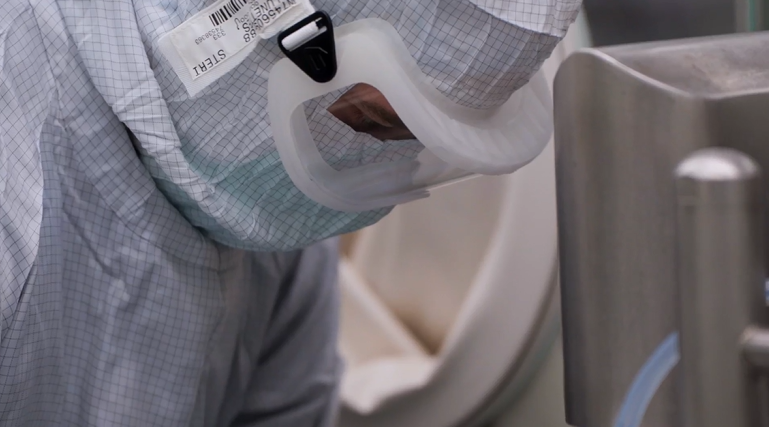
GMP compliance for CDMO manufacturing is the set of Good Manufacturing Practice standards that a Contract Development and Manufacturing Organization (CDMO) must meet to produce medicines safely, consistently and in a way that regulators will accept. When a pharmaceutical or biotech company selects a manufacturing partner, GMP compliance is the baseline that separates a credible CDMO from a risky one. This guide explains the certifications, the aseptic standards and the quality criteria to assess, across both semi-solid and injectable production.
Table of contents
- What is GMP compliance for CDMO manufacturing?
- The core GMP certifications to look for
- Aseptic standards for injectable production
- Quality criteria for semi-solid and non-sterile production
- How GMP compliance supports technology transfer
- How to verify a CDMO’s GMP compliance
- How Adragos maintains GMP compliance across its network
- Frequently asked questions
What is GMP compliance for CDMO manufacturing?
GMP compliance for CDMO manufacturing means that a site operates under Good Manufacturing Practice, the framework of rules that governs how medicines are made, tested, documented and released. In practice it covers the facilities, the equipment, the personnel, the procedures, the quality control and the record keeping. A compliant CDMO can demonstrate all of this through current certifications and a clean regulatory inspection record. It is the foundation that every other capability rests on, because a process is only as good as the quality system that runs it.
The core GMP certifications to look for
Certifications tell you which markets a CDMO can legally supply, so they are the first filter when comparing CDMO services. Look for the following:
- European Union Good Manufacturing Practice (EU-GMP), the baseline for supplying medicines in Europe.
- United States Food and Drug Administration approval, required to supply the United States.
- Swissmedic certification for sites in Switzerland.
- National approvals such as Japan PMDA, Brazil ANVISA or China NMPA, where you supply those markets.
You can review the European framework on the European Medicines Agency good manufacturing practice pages. A CDMO that already holds the certifications for your target markets saves you time and reduces regulatory risk.
Aseptic standards for injectable production
Injectable production carries the highest contamination risk, so it is held to additional aseptic standards on top of general GMP. Confirm that the site fills within a Restricted Access Barrier System (RABS) or isolator, with a Class A critical zone surrounded by a Class B environment, in line with the revised European Union Good Manufacturing Practice Annex 1 on sterile products. Ask to see a current, fully compliant Aseptic Process Simulation (APS), which is the media fill that proves the line can maintain sterility. The United States Food and Drug Administration guidance on sterile drug products produced by aseptic processing sets out the expectations in detail. Our sterile sites are built to these standards, with aseptic fill-finish and full Aseptic Process Simulation at our Jura site, and Class A in Class B RABS filling at our Maisons-Alfort site.
Quality criteria for semi-solid and non-sterile production
GMP compliance is not only about sterile products. For semi-solid dosage forms such as creams, gels and ointments, and for non-sterile liquids, look for a facility with robust batch control, controlled drug handling where needed, and certification for the product types you make. Our Leipzig site in Germany, for example, holds EU-GMP certification for both human and veterinary products, which is useful for companies with a mixed portfolio. The principle is the same across every dosage form: consistent quality, fully documented, batch after batch.
How GMP compliance supports technology transfer
Technology transfer depends on GMP compliance at both ends. When a process moves from development into manufacturing, or from one site to another, the sending and receiving sites must operate to the same standards for the transfer to hold. This is where an integrated network helps: when sites share one quality system, technology transfer is faster and carries less risk, because the documentation, the controls and the expectations already align.
How to verify a CDMO’s GMP compliance
Do not take GMP compliance on trust. Ask for the evidence:
- Current GMP certificates for the relevant markets.
- The regulatory inspection history and record of critical findings.
- Audit rights and a clear quality agreement.
- The site approach to deviations and Corrective and Preventive Actions (CAPA).
For a full walk-through of what to check on site, see our guide on how to audit a sterile injectable CDMO.
How Adragos maintains GMP compliance across its network
We hold the certifications required to supply medicines across Europe, the United States, Japan and beyond, at every site in our network:
- Leipzig, Germany: EU-GMP certification for human and veterinary semi-solid and non-sterile liquid products.
- Jura, Switzerland: EU-GMP, United States Food and Drug Administration approval and Swissmedic, with full Aseptic Process Simulation for sterile fill-finish.
- Maisons-Alfort, France: certified by twelve international health authorities, with an inspection record in which every action has been closed with zero critical findings.
- Halden, Norway: EU-GMP and United States Food and Drug Administration approval alongside authorities in Brazil, Japan and China, supplying more than seventy-five countries.
- Livron, France: EU-GMP with additional French and Korean approvals for sterile liquids and suppositories.
To discuss the certifications relevant to your product, contact our team.
Frequently asked questions
What does GMP stand for?
GMP stands for Good Manufacturing Practice, the framework of standards that governs how medicines are made, tested, documented and released to ensure they are safe and consistent.
What certifications should a CDMO have?
At a minimum, look for European Union Good Manufacturing Practice and, where you supply the United States, United States Food and Drug Administration approval. Swiss sites should hold Swissmedic, and national approvals such as Japan PMDA or Brazil ANVISA matter for those markets.
Is GMP the same for semi-solid and injectable production?
The core GMP principles are the same, but injectable production adds aseptic standards, including Restricted Access Barrier System or isolator filling, Annex 1 requirements and Aseptic Process Simulation, because sterility must be assured.
How can I confirm a CDMO is GMP compliant?
Ask for current GMP certificates, the regulatory inspection history, audit rights and a quality agreement. A compliant partner will share these openly and support an on-site audit.
