Table of Contents
Table of Contents
The highly potent active pharmaceutical ingredient (HPAPI) sector is one of the fastest-growing areas in the pharmaceutical industry, fuelled by the demand for novel targeted treatments. With the high-potency drug market valued at $185.5 billion in 2024 and projected to reach $520 billion by 2034, the operational demands of HPAPI manufacturing are becoming a critical focus for developers and contract partners.
Today, more than a quarter of all drugs are classed as highly potent. This trend is set to continue as drug development becomes more precise. We are seeing a general increase in potency levels and a rise in products for clinical microdosing that require HPAPI containment at the nanogram level. For any organisation involved in the formulation and manufacturing of these drugs, it is essential that all strategies, equipment, and procedures are fit for purpose.
Understanding the HPAPI Landscape
HPAPI-based drugs show significant promise in treating a range of diseases. Oncology drugs dominate the current market, with data showing that 60% of such treatments in development involve highly potent compounds. Beyond oncology, HPAPIs are also used to target indications such as asthma, diabetes, and central nervous system disorders. The precision of these molecules presents unique opportunities for patients and significant challenges for developers.
Core Challenges in HPAPI Manufacturing
Despite their therapeutic benefits, the toxicity of HPAPIs presents numerous obstacles during development and manufacturing.
Operator Safety and Exposure Risk
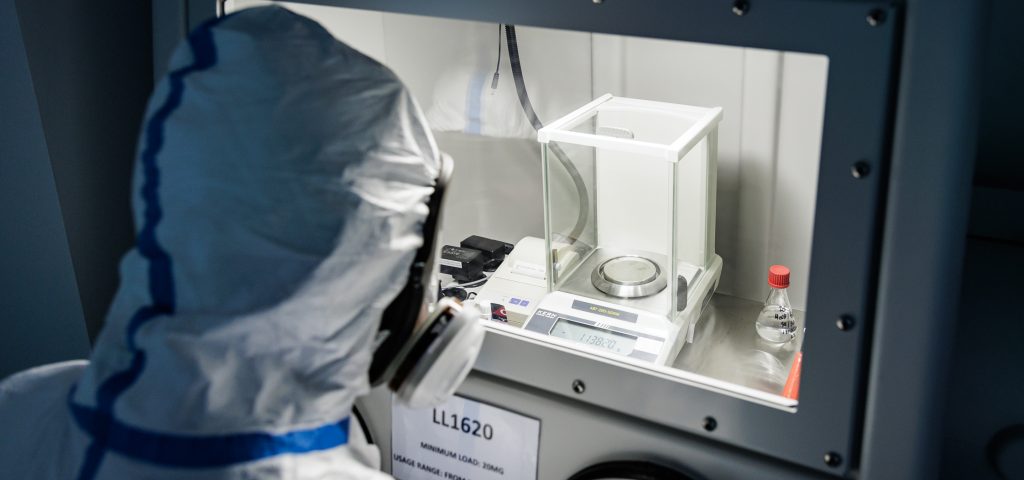
The greatest risk associated with HPAPI handling is operator exposure. Because the full health risks are often still under evaluation during the development phase, stringent containment measures and robust personal protective equipment are not just best practice, they are crucial.
Lack of Regulatory Standardisation
There is currently a lack of harmonised HPAPI classification and containment standards across the pharmaceutical industry. This means each company must establish its own internal guidelines for handling materials at every stage of development. This evolving regulatory landscape demands continuous reassessment of employed strategies to ensure they remain robust throughout the product lifecycle.
Small-Volume Validation and Testing
A secondary challenge in the development and manufacturing of HPAPIs is the small batch volumes often required. This, combined with the typical low dose of the final product, can make the testing and validation of containment measures a significant hurdle. These activities can become time-consuming and costly, as rigorous validation for small-scale operations proves problematic.
Strategies for Safe and Efficient HPAPI Handling
To overcome these production challenges, a multi-faceted approach grounded in accurate hazard assessment from the earliest development stages is essential. A formal risk mitigation strategy can identify potential hazards and introduce pre-emptive measures to ensure safety, enabling a smooth transition to the next development phase while reducing delays and minimising costs.
Early Hazard Assessment and Risk Mitigation
A thorough assessment of the potency and toxicity of the HPAPI is needed to understand the occupational exposure limit (OEL) for each molecule based on available information. If full toxicological data is not available, assumptions must be made based on analysis of the molecule and comparisons to known compounds with similar structures. While more data will always permit a more specific strategy, its absence requires building safety and uncertainty factors into the assessment to ensure a safe handling approach is adopted.
Defining the Occupational Exposure Limit (OEL)
From this information, an Occupational Exposure Band (OEB) is determined, which forms the basis of the containment strategy. Using the OEB, the HPAPI is assigned to a band according to its risk to human health. This dictates the appropriate engineering controls, such as containment equipment and ventilation systems, as well as administrative protocols and the necessary levels of personal protective equipment.
By employing advanced equipment and sophisticated analytical approaches, organisations can achieve a more accurate representation of toxicity risks. These include informed toxicological risk assessments and the use of quantitative structure-activity relationship (QSAR) models, which can predict the toxicity of new chemical entities. Together, these tools enable more targeted control strategies that are tailored to the specific hazards of each HPAPI, enhancing workplace safety and ensuring regulatory compliance.
Implementing Advanced HPAPI Containment and Engineering Controls
To maximise operator safety, the use of robotic liquid handling systems allows for the precise manipulation of HPAPIs without direct human exposure. This ensures consistent HPAPI handling and minimises risk. In combination with real-time wearable exposure sensors, which provide immediate data on HPAPI levels in the environment, companies can accurately monitor exposure and adapt safety protocols as needed.
The Importance of a Collaborative, Cross-Disciplinary Approach
A successful development programme that considers safety from concept to commercialisation relies on strong, cross-disciplinary collaboration. By integrating a Quality by Design (QbD) approach, safety measures can be implemented across the entire production pipeline, from small-scale research through to large-scale HPAPI manufacturing. In addition to ensuring operator safety, a collaborative approach streamlines the entire process, with smooth transitions between stages designed to reduce delays and expedite product delivery.
The Future of Highly Potent API Development
With so much of the development pipeline focused on highly potent drugs, the landscape will continue to evolve. Key shifts include:
- Sophisticated drug delivery systems: The use of nanoparticles, liposomes, and micelles to combine high potency with targeted delivery, maximising efficacy.
- Biological HPAPIs: The increase of biologicals such as antibody-drug conjugates (ADCs), which use monoclonal antibodies to deliver cytotoxic payloads directly to target cells.
- Advanced manufacturing: The integration of artificial intelligence and machine learning to optimise manufacturing processes and improve efficiency.
- Evolving regulations: The adaptation of regulatory frameworks to address the unique challenges of HPAPI production, facilitating innovation while maintaining safety.
Effectively Navigating HPAPI Complexity
The development and manufacture of HPAPIs pose several challenges, including operator safety, a lack of regulatory standardisation, and the need for specialised facilities. Overcoming these requires comprehensive hazard assessment, accurate toxicity determination, and the implementation of appropriate engineering controls and protocols. By adopting a multi-disciplined approach, pharmaceutical companies can ensure the safe and efficient development and manufacturing of HPAPI products.
FAQs About HPAPI Manufacturing
1. What is a highly potent active pharmaceutical ingredient (HPAPI)?
An HPAPI is a pharmacologically active substance that demonstrates biological activity at a very low dose. Due to their potency, they require specialised HPAPI handling and containment measures during manufacturing to ensure operator safety.
2. What is the biggest challenge in HPAPI manufacturing?
The greatest challenge is ensuring operator safety by preventing exposure to the highly potent compound. This involves a robust HPAPI containment strategy, including engineering controls, personal protective equipment (PPE), and validated procedures based on the molecule’s occupational exposure limit (OEL).
3. What is an Occupational Exposure Limit (OEL)?
An Occupational Exposure Limit (OEL) is the maximum airborne concentration of a substance to which a worker can be exposed over a specific period without suffering adverse health effects. For HPAPIs, the OEL is a critical parameter used to define the required level of containment and safety protocols.
4. Why are antibody-drug conjugates (ADCs) relevant to HPAPI manufacturing?
Antibody-drug conjugates (ADCs) are a major class of biopharmaceutical drugs that link a highly potent cytotoxic payload (an HPAPI) to a monoclonal antibody. The manufacturing of ADCs involves complex bioconjugation processes and requires stringent HPAPI containment, making it a key driver of innovation in the HPAPI sector.