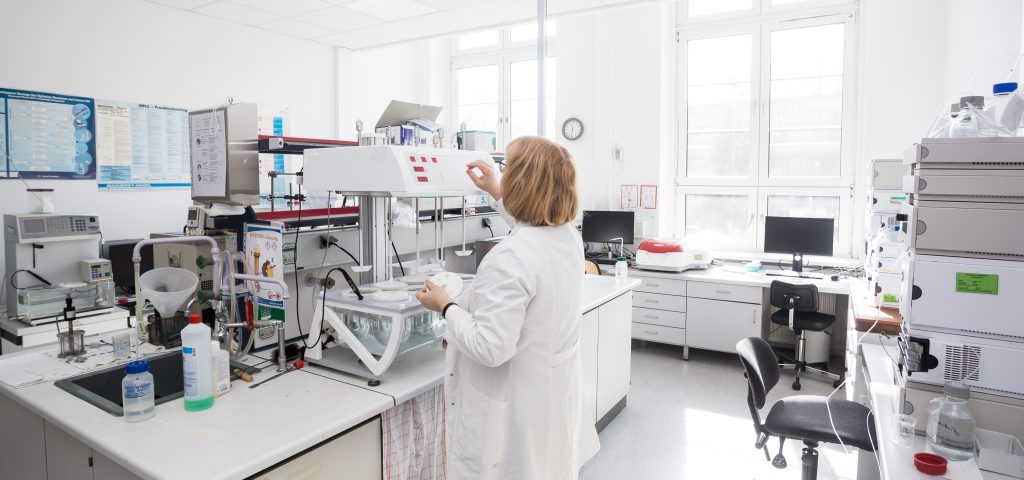
A non-sterile liquid CDMO is the right partner for the products that do not need to be sterile: creams, gels, ointments and oral or topical liquids. These are the everyday medicines that make up a large share of most portfolios, yet placing them raises a question that is easy to get wrong: does this product actually need sterile manufacturing, or not? This guide explains what a non-sterile liquid and semi-solid partner makes, when sterile manufacturing is and is not required, and how to choose a pharmaceutical CDMO for topical drug manufacturing with confidence.
Table of contents
- What is a non-sterile liquid CDMO?
- Sterile vs non-sterile manufacturing: when do you need each?
- What does a non-sterile liquid and semi-solid CDMO make?
- How to choose a pharmaceutical CDMO for topicals and non-sterile liquids
- Batch size and filling formats
- How Adragos supports non-sterile liquid and semi-solid manufacturing
- Frequently asked questions
What is a non-sterile liquid CDMO?
A non-sterile liquid CDMO, or contract development and manufacturing organisation, develops and manufactures liquid and semi-solid medicines that do not require a sterile process. That covers two related product families: non-sterile liquids such as solutions, drops, suspensions and emulsions, and semi-solids such as creams, gels, ointments and healing pastes. Because these products are applied to the skin or taken orally rather than injected, they are held to strict good manufacturing practice (GMP) standards but not to the sterility requirements of injectables.
Sterile vs non-sterile manufacturing: when do you need each?
The route of administration decides whether a product needs sterile manufacturing. A product that bypasses the body’s natural barriers or reaches a vulnerable site has to be sterile. A product applied to intact skin or taken by mouth usually does not.
- Sterile manufacturing is generally required for injectables, ophthalmic preparations and certain inhalation or irrigation products.
- Non-sterile manufacturing is appropriate for topical creams, gels and ointments and for oral solutions, suspensions and drops, where a controlled bioburden rather than absolute sterility is the standard.
The difference is not only regulatory. Sterile manufacturing needs cleanrooms, aseptic or terminal sterilisation processes and far more validation, which raises both cost and lead time. Choosing sterile when it is not needed adds expense, while choosing non-sterile when sterility is required is a serious compliance failure. Confirming the requirement early, ideally with your CDMO, avoids both mistakes.
What does a non-sterile liquid and semi-solid CDMO make?
A non-sterile liquid and semi-solid partner covers two familiar product families:
- Semi-solids: creams, gels, ointments and healing pastes for topical use.
- Non-sterile liquids: solutions, drops, suspensions and emulsions, taken orally or applied topically.
This is the world of topical drug manufacturing and everyday non-sterile liquid manufacturing: high-volume, well-understood dosage forms where reliability, batch flexibility and packaging choice matter more than exotic technology.
How to choose a pharmaceutical CDMO for topicals and non-sterile liquids
When you assess a pharmaceutical CDMO for topical and non-sterile liquid work, weigh these criteria:
- Dosage form fit. Does the site run semi-solids and non-sterile liquids on dedicated lines?
- Batch range. Does it cover both a small launch batch and a large commercial batch, so you can scale without changing site?
- Filling formats. Can it fill the tubes and bottles your product needs?
- Quality and compliance. Is it certified to good manufacturing practice and inspected for these dosage forms?
- Development support. Can it help from formulation and development through to commercial manufacturing?
Batch size and filling formats
Batch size and packaging shape cost, flexibility and how quickly you can respond to demand. Semi-solids and non-sterile liquids typically run on separate lines with different ranges, so a mixed portfolio should be assessed against each range separately. Ask for the full range, not just the maximum, because the low end is what makes small launches and niche products viable, while the high end covers commercial demand. The current good manufacturing practice standard applies across the whole range, whatever the batch size.
How Adragos supports non-sterile liquid and semi-solid manufacturing
Our Leipzig site in Germany specialises in semi-solid and non-sterile liquid pharmaceuticals, with over 100 years of experience on a 13,300 m² GMP-certified site. In practice that gives you:
- Semi-solids: creams, gels, ointments and healing pastes, in batches from 15 to 1,250 litres, filled into plastic tubes from 25 g to 200 g and aluminium tubes from 2 g to 150 g.
- Non-sterile liquids: solutions, drops, suspensions and emulsions, in batches up to 4,000 litres, filled into plastic and glass bottles from 20 ml to 700 ml.
- A wide batch range: from a 15 litre batch for a launch or niche product to a 4,000 litre commercial run, so a product can grow without leaving the site.
- End-to-end support: from development through to commercial manufacturing, with one point of contact.
That span, from a small launch batch to a large commercial run, is what makes Leipzig a practical outsourcing partner for topical and non-sterile liquid products. To discuss a formulation or a transfer, contact our Leipzig team.
Frequently asked questions
What is the difference between sterile and non-sterile manufacturing?
Sterile manufacturing produces a product free of viable microorganisms, using cleanrooms and aseptic or terminal sterilisation processes, and is required for injectables and other products that bypass the body’s barriers. Non-sterile manufacturing controls bioburden to safe limits and is used for topicals and oral liquids.
Do creams and ointments need sterile manufacturing?
Usually not. Creams, gels and ointments applied to intact skin are made under non-sterile GMP with a controlled bioburden. Sterile manufacturing is only needed for specific cases such as ophthalmic or wound products.
What is a non-sterile liquid CDMO?
A non-sterile liquid CDMO is a contract development and manufacturing organisation that develops and produces liquid and semi-solid medicines that do not require a sterile process, such as solutions, drops, creams, gels and ointments.
What products are made as non-sterile liquids?
Non-sterile liquids include solutions, drops, suspensions and emulsions, taken orally or applied topically.
What batch sizes are used for creams, gels and ointments?
Batch sizes vary widely by site. At our Leipzig site, semi-solids run from 15 to 1,250 litres and non-sterile liquids up to 4,000 litres, which covers small launch quantities through to commercial supply.
