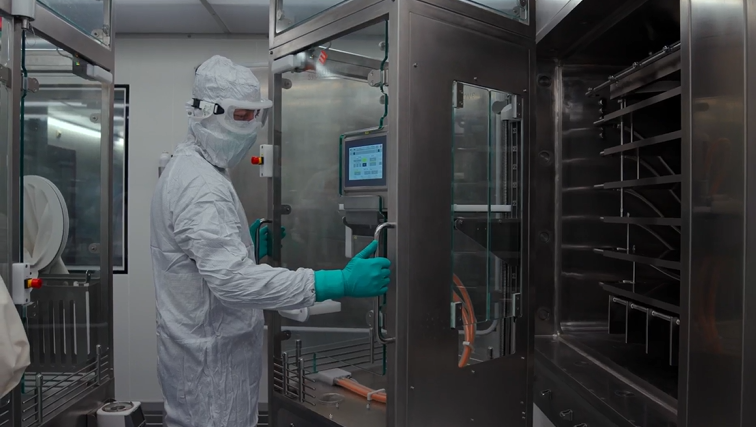
Pharmaceutical and biotech companies selecting sterile injectable contract development and manufacturing organisation (CDMO) services in Europe must evaluate partners across seven critical dimensions: programme-fit and technical capability, regulatory standing and Good Manufacturing Practice (GMP) certifications, Chemistry, Manufacturing and Controls (CMC) documentation support for European Medicines Agency (EMA) and United States Food and Drug Administration (FDA) submissions, pre-filled syringe and lyophilised vial manufacturing capacity, Highly Potent Active Pharmaceutical Ingredient (HPAPI) formulation capability, structured audit processes and clinical-to-commercial technology transfer. This guide provides a step-by-step framework for each stage.
Who This Guide Is For
This guide is written for pharmaceutical and biotech development, quality and CMC leaders who are actively sourcing European sterile fill-finish partners. Whether you are moving a molecule from clinical-stage production into a late-phase or commercial programme, or you are evaluating whether your current partner can scale alongside you, the framework below gives you a structured basis for comparison and decision-making.
What Is a Sterile Injectable CDMO and Why Does European Location Matter?
Sterile injectable manufacturing is among the most regulated and technically demanding categories in pharmaceutical contract manufacturing. Unlike oral solid dose or topical manufacturing, the aseptic fill-finish process tolerates no margin for error: contamination, particulate matter, container closure integrity failures or deviations in lyophilisation cycles have direct consequences for patient safety and regulatory compliance.
Locating your fill-finish partner within Europe carries several practical and regulatory advantages:
- Regulatory alignment with the EMA framework, which governs GMP standards across the European Economic Area and is enforced through national competent authorities such as the Agence Nationale de Sécurité du Médicament et des Produits de Santé (ANSM) in France
- EU GMP Annex 1 compliance, the comprehensive revision of which became mandatory in August 2023 and sets current best practice standards for the manufacture of sterile medicinal products, including updated contamination control strategy requirements
- Proximity to EMA scientific advice processes, supporting faster iterative CMC development and submission strategy
- Supply chain resilience, particularly important for biologics and critical injectables requiring temperature-controlled logistics within the European Union
Step 1: Define Your Programme Requirements Before Approaching Partners
Before evaluating any CDMO, establish internal alignment on the following parameters. These define the minimum viable capability set your partner must possess.
Product and Formulation Profile
- Drug substance classification: small molecule, biologic, peptide or Highly Potent Active Pharmaceutical Ingredient
- Target container: pre-filled syringe, vial (liquid or lyophilised), ampoule or cartridge
- Fill volume range and viscosity characteristics
- Solvent system: aqueous, non-aqueous or co-solvent
- Stability profile and required cold-chain specification
Development Stage and Intended Scale
- Current stage: early clinical, late clinical or commercial launch
- Batch size range required today versus projected at commercial scale
- Whether the programme requires clinical-scale flexibility alongside commercial-scale capacity at the same site or across a network
Regulatory Filing Strategy
- Target markets: European Union, United States or multi-regional
- Submission type: Investigational New Drug application, Investigational Medicinal Product Dossier, Marketing Authorisation Application, New Drug Application or Biologics Licence Application
- CMC documentation deliverables required from the CDMO and the expected timeline against submission milestones
Step 2: Evaluate Technical Capabilities Against Your Container and Formulation Requirements
Not all sterile fill-finish CDMOs offer equivalent technical breadth. For complex injectables, you must establish whether the partner has demonstrated, documented capability for your specific product format.
Pre-Filled Syringe Fill-Finish Manufacturing Capacity
Pre-filled syringe (PFS) manufacturing demands precision filling equipment configured for glass or polymer syringe barrels, controlled stopper placement and crimping, container closure integrity testing and validated automated visual inspection. Key questions to ask:
- What filling speeds are achievable and at what batch size?
- What syringe formats and barrel types are supported?
- What container closure integrity test methods are employed and have these been validated to support regulatory submissions?
- Is the inspection system automated, semi-automated or manual, and does it meet current EMA and FDA expectations for 100% inspection of parenteral products?
Lyophilised Injectable Manufacturing at Clinical and Commercial Scale
Lyophilised vial manufacturing requires additional process development complexity, including formulation of a lyophilisation-compatible composition, design and validation of a freeze-drying cycle and vial stopper placement under controlled conditions prior to chamber loading.
When evaluating CDMO capability for lyophilised injectable manufacturing, confirm:
- Lyophiliser capacity at clinical and commercial scale
- Whether cycle development is conducted in-house using scale-appropriate equipment
- Track record of cycle scale-up and the engineering data package expected to support process validation
- Vial formats and stopper configurations available
- Whether a minimum batch size applies at each scale
HPAPI Formulation and Development Capabilities
For oncology and other programmes containing Highly Potent Active Pharmaceutical Ingredients, containment is a non-negotiable technical requirement. Occupational Exposure Band (OEB) classification and the associated Occupational Exposure Limit (OEL) determine the engineering controls and procedural safeguards required at every stage of formulation and fill-finish.
When evaluating a CDMO’s HPAPI capability, confirm:
- The lowest OEL the site is validated to handle, expressed in micrograms per cubic metre
- The Occupational Exposure Band rating the containment infrastructure has been designed and qualified to support
- Whether containment capability applies at the formulation and analytical development stage, the manufacturing stage or both
- Whether the HPAPI laboratory and associated analytical capabilities hold GMP certification from the relevant national competent authority
Step 3: Assess Regulatory Standing and GMP Certifications
The regulatory inspection history of a CDMO is a direct proxy for the reliability of its quality system. A site that maintains consistent compliance across multiple major regulatory authority inspections operates under meaningful, sustained scrutiny, which is materially different from a site that holds a certificate but has not been inspected recently or broadly.
What to Request and Verify
- Current GMP certificate(s) issued by the relevant national competent authority, for example ANSM in France or Swissmedic in Switzerland
- EU GMP certification status and evidence that the site is listed on the EudraGMDP database of certified manufacturers
- Inspection history with major international authorities, including the FDA, ANSM, the National Medical Products Administration (NMPA) in China, the Ministry of Food and Drug Safety (MFDS) in South Korea and the Brazilian Health Regulatory Agency (ANVISA)
- Qualified Person designation and evidence of that individual’s engagement across batch release for the product types relevant to your programme
Reading an Inspection Record
When reviewing an inspection history, look beyond the binary pass or fail outcome. Examine:
- The frequency and recency of inspections from major authorities
- The nature and criticality classification of any observations raised
- Whether the CDMO’s corrective and preventive action responses were accepted promptly and without re-inspection
- Whether there is a sustained pattern of the same deficiency categories appearing across inspection cycles
Step 4: Assess CDMO CMC Documentation for EMA and FDA Submissions
A sterile injectable CDMO must be able to generate, maintain and transfer the technical documentation that directly supports your regulatory submissions. This is not merely a quality assurance question. It is a question of scientific depth, authorship capability and alignment with current regulatory guidance from both the EMA and the FDA.
Key CMC Documentation Deliverables for Sterile Injectables
The following document categories must be planned and agreed contractually before technology transfer commences.
Drug Product Manufacturing Process Description
A full narrative and batch formula description aligned with Module 3.2.P of the Common Technical Document format, covering all unit operations from compounding through to final inspection and packaging.
Process Validation Protocol and Report
For commercial programmes, a prospective process validation strategy with three conformance batches, supported by statistical analysis of critical quality attributes across agreed process control parameters.
Container Closure Integrity Testing Data Package
Validated methods and data demonstrating that each container system maintains sterility assurance under defined storage and shipping conditions.
Extractables and Leachables Assessment
For pre-filled syringe and container-closure combinations, a completed extractables and leachables assessment referenced against Product Quality Research Institute guidance and applicable regulatory expectations.
Environmental Monitoring Data Summary
A historical summary of environmental monitoring results supporting Grade A, B, C and D classification, demonstrating sustained contamination control performance in accordance with EU GMP Annex 1 (2023 revision).
Analytical Method Transfer Packages
Documented method transfer protocols and reports confirming that all release and stability methods have been successfully transferred to and validated at the CDMO site.
Raw Material and Excipient Qualification
Documented qualification of all raw materials, including excipients and packaging components, with certificates of conformance and, where required, European Pharmacopoeia compliance statements.
Step 5: Conduct a Formal CDMO Audit, GMP Certifications and Onboarding Process
A paper review of certifications and documentation packages is necessary but not sufficient. A formal on-site audit conducted by your quality team, and ideally supported by a technically experienced CMC lead, is the appropriate mechanism to verify that documented systems reflect actual practice.
Preparing Your Audit Plan
Define the audit scope in advance. For a sterile injectable fill-finish CDMO, your audit should cover as a minimum:
- Site overview and quality system structure
- Aseptic filling area and gowning facilities
- Lyophiliser suite, where relevant
- Environmental monitoring programme and data review
- Media fill programme, frequency and historical outcomes
- Change control and deviation management processes
- Batch record review, redacted for confidentiality if required
- Supplier qualification programme
- Out-of-specification investigation process and closure rates
- Technology transfer procedure and assigned project team
During the Audit
Use structured open-ended questions rather than checklists alone. The depth and precision of the responses given by quality and operational personnel on site will reveal whether quality culture is embedded in day-to-day working practice or reflected only in documentation.
Request a walkthrough of the actual fill-finish line or lyophilisation suite. Observe material flow, personnel access controls and the physical segregation of materials in-process. These observations cannot be replicated from remote document review.
After the Audit
Issue a formal audit report with observations classified by criticality. Require a written corrective and preventive action plan from the CDMO with committed closure dates. Audit findings and CDMO responses should be retained as part of your vendor qualification file and referenced at contract signature.
Step 6: Technology Transfer from Clinical to Commercial Scale
Technology transfer is the structured process by which your drug product manufacturing process, analytical methods and quality systems are formally replicated at the CDMO site. For sterile injectables, this is among the highest-risk activities in the development programme and should be governed by a written Technology Transfer Plan agreed before work begins.
What a Technology Transfer Plan Should Cover
- Process description and reference batch data from the sending site
- Critical quality attributes and their associated acceptance criteria
- Critical process parameters and established operating ranges
- Analytical method transfer protocols and success criteria
- Stability data available from the sending site and the agreed stability programme to be initiated at the CDMO
- Equipment comparability assessment between sending and receiving sites
- Risk assessment and gap analysis between clinical and commercial scale
- Batch campaign plan and approval gates
Clinical-to-Commercial Scale-Up for Sterile Injectables
Scale-up for aseptic fill-finish differs materially from solid dose scale-up. The compounding vessel size, the filtration train surface area, fill needle configuration and filling line speed all influence product quality and must be assessed individually. Where lyophilisation is involved, cycle translation from small-scale development equipment to a production-scale lyophiliser requires engineering data, not assumption.
Your Technology Transfer Plan should define the criteria by which scale-up is deemed successful before process validation batches are manufactured. These criteria must be agreed in advance by both quality teams and should be aligned with the evidence package your regulatory submission will rely upon.
CMC Documentation Generated During Technology Transfer
Technology transfer generates the majority of the CMC data package that will support your EMA or FDA submission. Ensure that the CDMO’s project team is authoring documents to the appropriate format and detail throughout the transfer process, rather than retrospectively summarising executed work. Delays in CMC documentation preparation remain a common source of submission timeline risk.
Step 7: Formalise Onboarding and the Quality Agreement
Onboarding concludes with the execution of a Quality Agreement, a binding document that defines the responsibilities of both parties across all quality-critical activities. For sterile injectable manufacturing, the Quality Agreement must address:
- Responsibilities for batch release and Qualified Person oversight
- Deviation and out-of-specification notification timelines
- Change control: which changes require sponsor approval, which are managed unilaterally by the CDMO and what notification timelines apply
- Annual Product Review participation and data provision
- Recall procedures and regulatory authority notification obligations
- Responsibilities for stability programme management and data reporting
- Audit rights and frequency
The Quality Agreement should be treated as a living document. Programme circumstances change, and the agreement should be reviewed whenever a significant change in scope, site, equipment or regulatory strategy occurs.
A Summary Evaluation Framework for European Sterile Injectable CDMOs
When comparing multiple European sterile injectable CDMOs, the following framework provides a consistent basis for structured assessment.
| Evaluation Dimension | Key Questions |
| Technical capability | Does the site have validated, operational capability for your container type and formulation class? |
| Regulatory inspection history | Which major authorities have inspected the site, how recently and with what outcome? |
| CMC documentation depth | Can the team generate submission-ready documentation to EMA and FDA standards? |
| Scale range | Does the site support clinical-scale and commercial-scale manufacturing, and is continuity between stages possible? |
| Technology transfer experience | Does the CDMO have a documented process for clinical-to-commercial transfer for your product type? |
| Quality system maturity | Do deviation rates, out-of-specification rates and annual product review timelines reflect a functional quality system? |
| HPAPI handling | Is there validated containment capability appropriate for your compound’s occupational exposure classification? |
| Capacity and lead time | Is current and projected capacity available to meet your development and launch timelines? |
Adragos Pharma: Sterile Injectable CDMO Services in Europe
Adragos Pharma is a global contract development and manufacturing organisation headquartered in Munich, Germany. Its sterile injectable manufacturing network spans multiple European sites, supporting programmes from early development through to commercial supply across Europe, Japan and North America.
Maisons-Alfort, France: Commercial-Scale Pre-Filled Syringe and Lyophilised Vial Manufacturing
In April 2026, Adragos completed the acquisition of a commercial-scale sterile fill-finish facility in Maisons-Alfort, France, from Sanofi. The Maisons-Alfort site is one of Europe’s largest manufacturing facilities for sterile injectables, with industrial-scale capacity for pre-filled syringes as well as liquid and lyophilised vials.
The site supports multiple pre-filled syringe presentations including Standard, Preventis™ and Eris™ formats, with filling speeds of up to 540 syringes per minute across two dedicated aseptic filling lines. Vial production covers both liquid and lyophilised formats. Automated inspection systems and packaging operations form part of the integrated manufacturing capability at commercial scale.
The Maisons-Alfort facility is regularly audited by international health authorities, including ANSM (France), the National Medical Products Administration (NMPA) in China, the Ministry of Food and Drug Safety (MFDS) in South Korea and the Brazilian Health Regulatory Agency (ANVISA). This multi-authority inspection track record provides partners with documented confidence in the site’s regulatory standing across global markets.
Jura, Switzerland: Clinical-Scale Aseptic Fill-Finish and Lyophilisation
Adragos Pharma’s Jura facility in Courroux, Switzerland, is dedicated to clinical-scale aseptic fill-finish and lyophilisation for both liquid and lyophilised sterile vials. With over 20 years of experience in sterile manufacturing, the Jura site is certified by Swissmedic and holds both GMP and FDA certification, supporting programmes from early-phase development through Phase I to Phase III clinical supply.
The facility is purpose-built for small clinical and commercial batches, offering flexibility in batch size without minimum batch size requirements for lyophilisation, which is a practical consideration for early-stage and high-value biological products where Active Pharmaceutical Ingredient availability is limited.
Athens, Greece: HPAPI Formulation and Development
Adragos Pharma’s Athens facility is a dedicated drug development site with more than 3,000 square metres of research and development space, specialising in value-added medicines and small-molecule development. The Athens site houses a dedicated HPAPI laboratory, built in 2023, equipped to safely manage Highly Potent Active Pharmaceutical Ingredients with an Occupational Exposure Limit no lower than 0.5 micrograms per cubic metre and an Occupational Exposure Band 5 classification.
The HPAPI laboratory at Athens is supported by an EU-GMP approved analytical laboratory, providing integrated analytical capability for development and characterisation work on highly potent compounds. For development teams working on oncology or other potency-sensitive programmes, the Athens site provides contained formulation development capability within the broader Adragos European network.
A Multi-Site European Network Supporting Clinical to Commercial Continuity
Adragos’ European sterile injectable network allows partners to access different scale and format capabilities across sites operating under a common quality management framework. The combination of HPAPI development capability in Athens, clinical-scale aseptic fill-finish in Jura and commercial-scale pre-filled syringe and vial manufacturing in Maisons-Alfort means that programmes can progress from formulation development through to commercial supply within a single CDMO relationship, reducing the regulatory and operational risk associated with site changes between development stages.
To discuss your programme requirements and assess fit with Adragos’ European manufacturing network, visit adragos-pharma.com/our-locations.